Testing frequency increases for many fleets — check your CTC-VIS deadline
530-378-9111
NATIONWIDE AUTOMATIC CLEAN TRUCK CHECK TESTING

CARB testing anywhere in the U.S.

Your eligible truck can complete Clean Truck Check testing while it is operating anywhere in the United States. Install the CC40 once and keep it connected under an active service term: it handles eligible OBD testing cycles automatically when the truck is ready and submits eligible results to CARB over built-in cellular. No trip back to California just to test. No testing appointment to schedule.

Not sure where your trucks stand? Call the owner, or send a photo of your registration — that has everything we need to tell you what each truck requires.

CC40 · Live WHAT SHIPS TO YOU
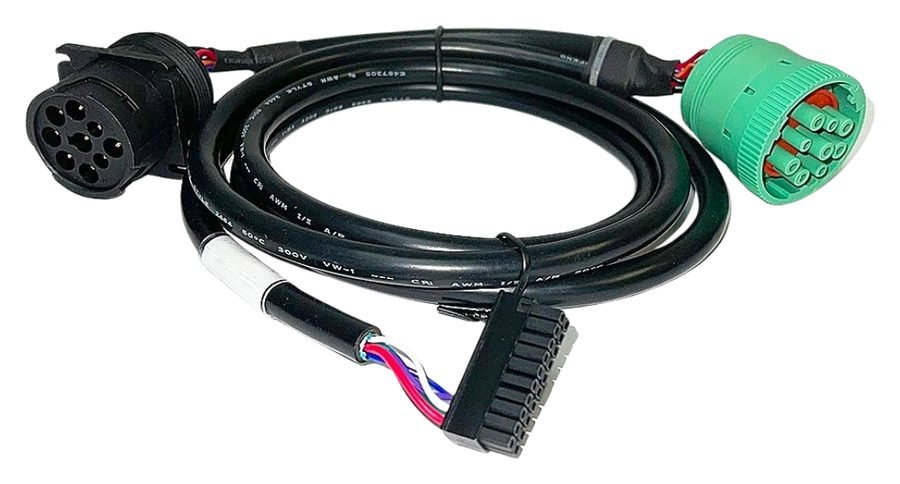
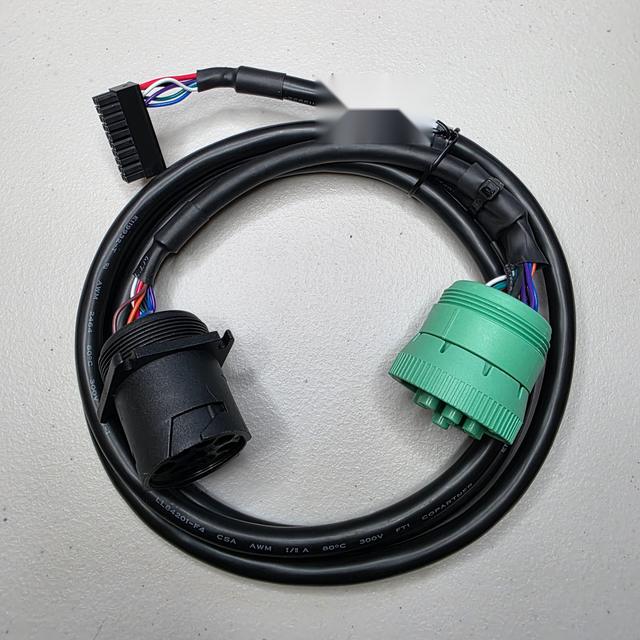
The CC40 J1939 cable: black 9-pin to the truck's diagnostic port, green 9-pin pass-through so an existing GPS or ELD stays connected, and the ribbon connector to the CC40 itself
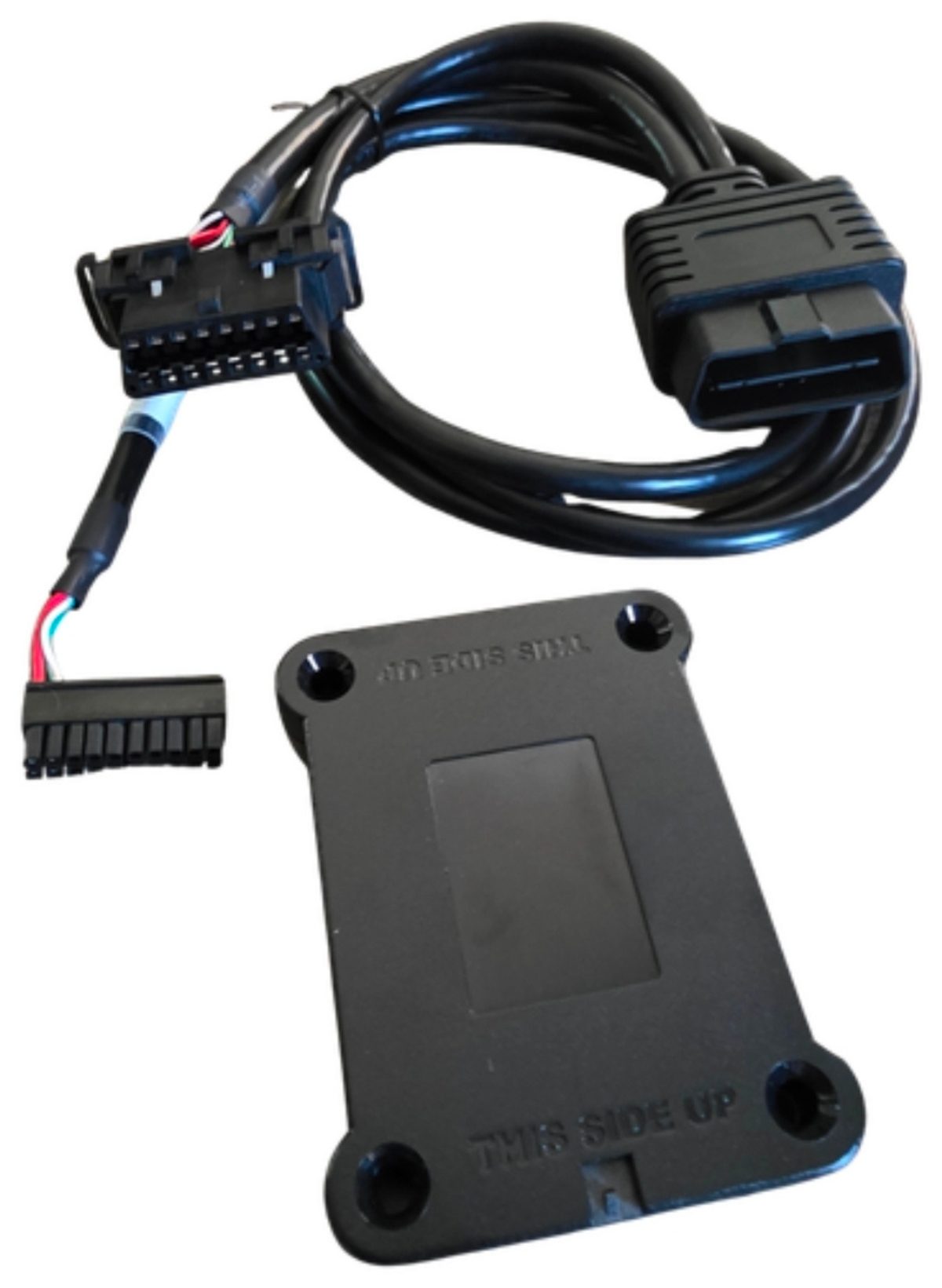
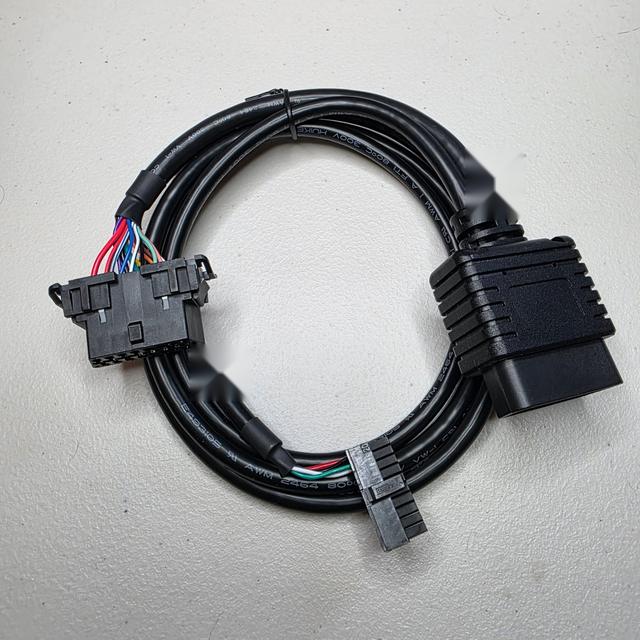
CC40 16-pin J1979 OBD pass-through cable with mounting bracket
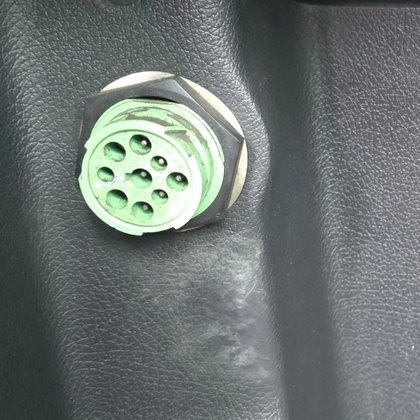
Round green 9-pin J1939 diagnostic port inside a truck cab What to look forA round green 9-pin socket, usually low on the kick panel or under the dash.
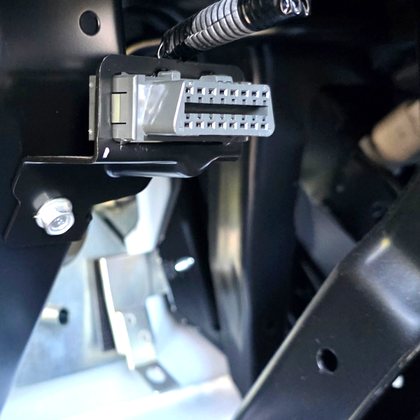
Grey 16-pin OBD-II diagnostic port mounted under a truck dash What to look forA grey rectangular 16-pin socket, usually under the dash near the steering column.

Most heavy trucks use the 9-pin. Tap any dot to see what each end does.
The CC40, in plain language

Plug in. Leave connected. Eligible tests are submitted for you. The CC40 connects to one assigned vehicle, runs eligible OBD testing when the truck is ready, and sends results to CARB over built-in cellular. No Wi-Fi or driver app is needed.

Your truck can test anywhere in the U.S. Clean Truck Check applies to eligible trucks that operate in California, even if registered elsewhere. The CC40 lets those trucks complete testing nationwide without a special return trip to California.

Your next step: check eligibility or request the agreement below. We confirm your vehicle details and cable, then program and ship the device. You remain responsible for repairs, CARB fees and confirming compliance in CTC-VIS.

Check engine light on? The truck will fail.

That light is not a general warning — it is the malfunction indicator lamp, and it exists specifically to report emissions faults. When it is on, the truck’s computer is already saying an emissions system has a problem, and a Clean Truck Check test reads exactly that. There is no way to pass around it.

The same is true with a CC40 installed. The device does not repair anything — it reports what the truck reports. It does keep trying, though. If a test does not pass, the device looks again the next day, and keeps looking. Once the fault is repaired and the truck’s computer has finished its own readiness checks, the next attempt goes through on its own. You do not have to call anyone or rebook anything.

Call before you book. We would rather tell you to get it repaired first than take your money for a test that cannot pass. Stored codes and incomplete readiness monitors will stop a pass too, and a recent battery disconnect can reset monitors — the truck usually needs some drive time before it is ready.

Which cable does my truck take?

You don’t have to work this out — we confirm it before anything ships. But if you want to check the port yourself, this is the usual split.

J1939 — round green 9-pin
Most Class 8 tractors
  • Peterbilt
  • Kenworth
  • Freightliner
  • Western Star
  • International
J1979 — 16-pin OBD
Medium-duty and many newer chassis
  • Ford
  • Chevrolet
  • Dodge / Ram
  • Hino
  • Isuzu
  • Volvo
  • Mack
This is the common configuration, not a rule — the same make can use either port depending on year and chassis. Send a photo of the port under your dash, or call, and we’ll tell you which cable yours needs. The right one ships with the device either way.
Why it exists

The compliance chore that never stops coming back

Testing frequency is increasing — and in October 2027 it doubles for OBD trucks. For a freight carrier, a grading contractor, or a hauler running a mixed yard, every cycle without the CC40 is one more deadline to track, one more appointment to book, one more truck pulled off a job, and one more chance for a missed requirement to contribute to a DMV registration hold. The CC40 significantly reduces that recurring scheduling and tracking work.

Without the CC40
  • Track every truck's testing deadline yourself
  • Book an appointment each cycle
  • Wait for a tester, or drive to a shop
  • Pull the truck off the road for it
  • Do it all again next cycle
With the CC40
  • Plug it in once
  • It tests automatically when the truck is ready
  • It submits the results to CARB over its own cellular, and CARB sends the compliance information to DMV
  • Testing happens without a special trip off the road
  • Clean Truck Check stops eating your time
What we actually do for you

We take Clean Truck Check off your plate

Compliance is tracked by VIN in CARB's system, and a missed deadline can lead to a DMV registration hold — often noticed only when someone tries to renew. Deadlines and status live in your CTC-VIS account. We use automation to stay ahead of that schedule. Four things you'd normally track yourself. Four things the CC40 helps handle.

Stay ahead of your testing deadlines

The CC40 runs testing on its own and submits eligible results ahead of your deadline, as long as it stays connected and the vehicle is ready. When results go in ahead of the deadline, there's far less chance of a compliance gap.

Without it: a missed deadline can lead to CARB enforcement and a DMV registration hold.

Test earlier, leave time to fix problems

Eligible passing tests may be submitted within the 90-day window before the applicable deadline — creating more time to address a not-ready or failed result before the deadline. CARB controls processing and portal-display timing.

Without it: last-minute testing leaves no room to fix and retest before the deadline.

Help keep testing from interrupting operations

Keeping eligible trucks current on testing helps reduce the risk that a compliance issue disrupts normal fleet operations — during roadside checks, customer reviews, or access to regulated facilities.

Without it: noncompliance can affect facility access and customer requirements, and draw CARB penalties.

2027 arrives as a non-event

When eligible OBD testing is automated, the added frequency creates far less work. Quarterly looks exactly like semi-annual — nothing to schedule, nothing to track. You set it up once and the change just passes you by.

Without it: OBD testing increases to four times a year starting October 2027 — more cycles to track.

One setup significantly reduces the recurring scheduling and tracking work.

Call 530-378-9111
How the CC40 works

Set it up once. It tests from then on.

01

You send the vehicle info

VIN, license plate, engine details, and the testing schedule for that specific truck.

02

We program the device

Each CC40 is locked to one vehicle by VIN, plate, and schedule. One truck, one device.

03

You plug it in

It ships programmed with the right cable. It draws power straight from the OBD port — no wiring, no separate power source, no electrician. Plug in, mount, done.

04

It tests automatically

Built-in cellular runs and submits the test when the truck is ready. No app, no phone, no driver.

Installed and running

Real trucks. Real installs.

Your branded CC40, plugged into the truck's diagnostic port and running — this is the whole job.

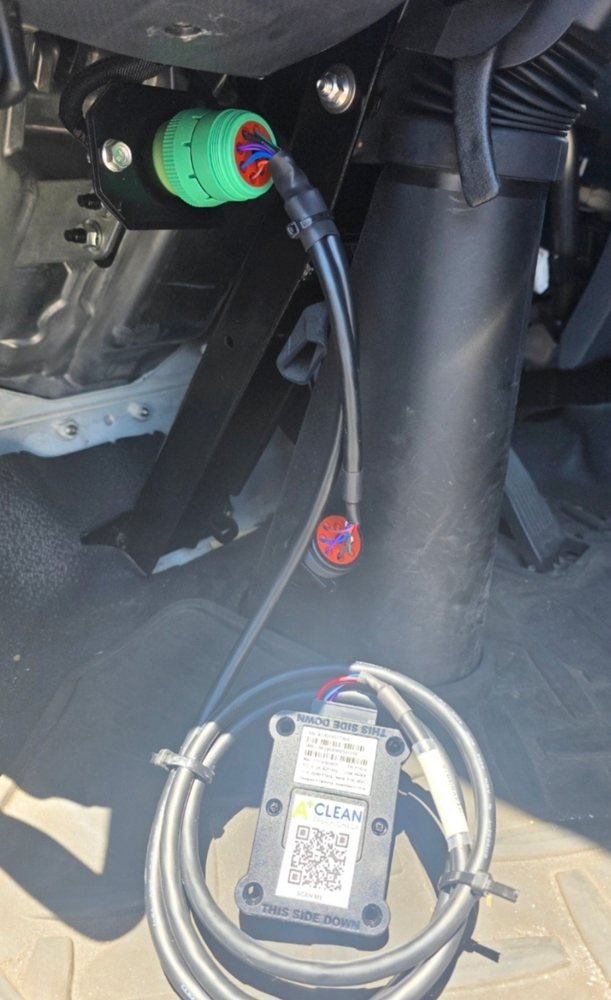
A CC40 installed in a truck cab, cable run from the green 9-pin diagnostic port down to the device, coiled and zip-tied clear of the pedals
Programmed, plugged in, and testing on its own — no appointments, no driver involvement.
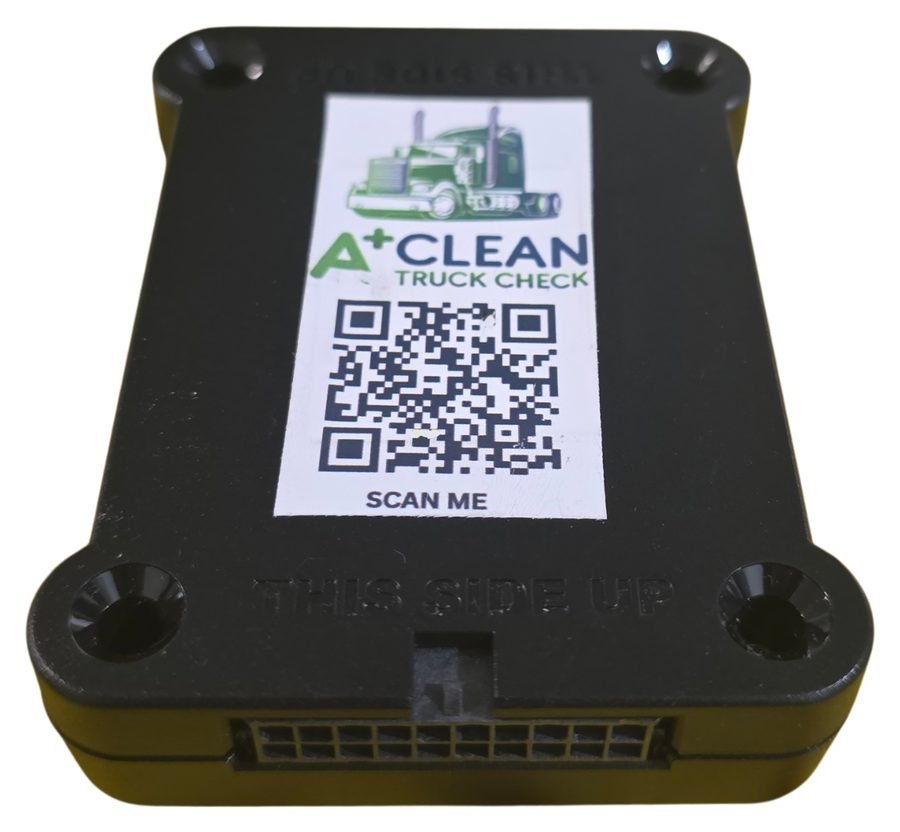
The CC40 automatic Clean Truck Check device, showing the mounting tabs and diagnostic connector
The CC40 — programmed to your truck before it ships
9-pin J1939 CC40 cable with pass-through connector
9-pin (J1939) cable
16-pin J1979 OBD CC40 cable with pass-through connector
16-pin (J1979) cable
In the box · your ELD keeps its port

One port. Nothing gets unplugged.

Your truck has one diagnostic port, and something may already be in it. The CC40's cable has a pass-through connector, so your existing ELD or GPS stays connected and keeps working right alongside it.

  • DEVICEThe CC40 itself, programmed to your vehicle before it ships.
  • CABLEThe correct cable for your truck — 9-pin (J1939) or 16-pin (J1979) — with a splitter so your existing GPS or ELD keeps its port.
  • CELLULARBuilt in and included for the whole term. Nothing to activate.
  • INSTALLPlug in, mount label-side up, done.
Quick check

Is your truck a fit for the CC40?

Tractors, box trucks, dump trucks, mixers, water trucks, service rigs — if it's an OBD-eligible diesel over 14,000 pounds, the CC40 likely fits. Answer three things, or just call and we'll check your VINs for you.

1 · Engine year & fuel

2 · Weight

3 · Diagnostic connection

Tap an answer in each row.

Out-of-state · Cross-border · Owner-operator

Not registered in California? You still have to comply.

If your truck operates in California — even just passing through — Clean Truck Check can apply, no matter where it's registered, including vehicles based outside the United States. That catches a lot of out-of-state and cross-border operators off guard at a roadside stop or a port gate. The CC40 automatically handles eligible OBD testing cycles when the vehicle is ready and the unit stays connected under an active service term — reducing the compliance work of operating in California. Atención bilingüe disponible.

$299.99per vehicle / year
Everything included: the device, the correct cable, programming to your vehicle, cellular service, shipping, and testing for the term. No separate activation, no per-test charge.
$259 promotional price — currently available. Standard annual price $299.99. Each vehicle keeps its enrolled rate while service for that vehicle stays continuously active, subject to the agreement terms.
Request the CC40 agreement Or call 530-378-9111
The part no device can do

You're not figuring this out alone

The CARB rules are written for regulators, not truck owners. Most people read them once and still aren't sure — and there's nobody to ask. That's what we fix that no device can. Call and you reach an experienced tester with 20+ years in emissions, who tells you plainly which trucks need the CC40, which need a smoke test, and when each one is due.

530-378-9111
Danny Barbosa, owner · English & Spanish
A person picks upNot a portal, not a ticket. Explain your fleet once, get a straight answer.
We read CTC-VIS with youNot sure what's due? Send a photo of your registration — we'll walk through it.
Flat price, no catch$299.99/year list, $259 promotional right now — everything included. You've been upsold before — this isn't that.

What the CC40 does not do

We'd rather be straight with you than oversell. The CC40 automates eligible OBD testing — not every part of compliance. It attempts testing when the truck is ready and submits eligible results through its built-in cellular connection. It does not repair emissions faults, guarantee a passing result, pay your CARB fees, renew your registration, or correct inaccurate CTC-VIS information. The truck must be mechanically ready, and the device must stay connected under an active service term. Vehicle owners remain responsible for CARB fees, accurate account information, repairs, and registration. If a truck has a fault, the CC40 reports it honestly — and we'll tell you what we're seeing so you can get it handled.

What fleet owners say

They plugged it in and stopped scheduling tests

Real A+ Plus customers, in their own words — 5.0 star rating on Google.

★★★★★
The CC40 has made CARB Clean Truck Check compliance much easier for our fleet. The convenience and peace of mind of not having to schedule an appointment or find a shop to perform the test has been completely worth it. Installation was very easy, and I plan to install the CC40 in all future trucks we purchase.
OS
Omar S.
Solidify Transport LLC
★★★★★
We've had a great experience using the CC40 for our fleet. It was incredibly easy to plug in and start using right away. The biggest benefit has been not scheduling mobile testing appointments anymore. It automatically submits the tests to CARB, keeping our trucks compliant while they're out on the road. We're adding another device for one of our other businesses.
K
Keith
UWF Inc.
Read the rest

Every review carries a real company name. Read all of them, or check our other claims.

See all reviews

What happens once it’s plugged in

Every test runs through the same five stages, and we watch all of them. You do not get a portal to watch — monitoring the device is our job. Confirming your compliance is still yours, and that lives in CTC-VIS.

A truck that passes Illustrative · quarterly schedule beginning October 2027 · window 07-03 – 09-30
1
ScheduledWindow opens
2
NotifiedDevice told to test
3
ReportedTruck data read
4
SubmittedSent to CARB
✓
PassedResult on file

All of it happens while the truck is out working. How long it takes depends on vehicle readiness, connectivity and CARB processing — but nobody schedules anything and no driver is involved.

A truck that fails Illustrative · window 09-02 – 11-30 · still open
1
ScheduledWindow opens
2
NotifiedDevice told to test
3
ReportedTruck data read
4
SubmittedSent to CARB
✕
FailedResult on file

The failed result is submitted to CARB — we would rather tell you that than have you find it later. But the window is still open. Get the fault repaired, drive the truck so its computer can finish its self-checks, and the device keeps looking for a passing test until the window closes.

What you actually see: nothing, until we call. We watch the pipeline for every enrolled truck. If one fails or stops reporting, you hear from us — in English or Spanish, from the person who installed it.

What happens if a test doesn’t pass?

The device handles the testing attempts and the submissions. Repairs, CARB fees and your account information stay with you. Here is exactly how it works through a failed test.

1
The device works in testing windows, not appointments. It ships set up for the quarterly schedule that begins in October 2027, and a passing test can be submitted within the 90 days before each of your CARB deadlines. As soon as a window opens, the device starts looking for a test.
2
It will not test until the truck’s computer is ready. If readiness monitors have not finished — after a repair, or a battery disconnect — the device waits. It does not throw a test at a truck that cannot report properly.
3
If it tests and fails, it looks again the next day. And the next. It keeps looking for a passing result for the rest of the window. You do not rebook, call, or reset anything.
4
Every test it runs is submitted to CARB — including a failed one. We would rather you hear that from us than find it in CTC-VIS. A failed result is not a penalty; it means the truck is not compliant yet. The whole point of the submission window is that you have room to repair the truck and get a passing test inside it.
5
Repairs are still on you. The CC40 does not fix anything and neither does a mobile visit. Once the fault is repaired and you have driven the truck enough for its computer to finish its self-checks, the next attempt goes through on its own.
When it passes, it submits. The CC40 sends the result to CARB, and CARB sends the compliance information to DMV. Testing is only one part of compliance — the vehicle also has to be reported and the annual CARB fee paid. Confirm all of it in CTC-VIS.
CC40 questions

Straight answers

Tap any question to open it.

Does the CC40 require Wi-Fi or the driver's phone?
No. Cellular service is built into the device. No Wi-Fi, no Bluetooth pairing, no app on anyone's phone. There's nothing for your driver to do or remember.
Which trucks is the CC40 for?
OBD-eligible heavy-duty vehicles — generally 2013-and-newer diesel and 2018-and-newer alternative fuel, over 14,000 lb GVWR, with a compatible J1939 or J1979 connection. For 2012-and-older diesels that need smoke and visual testing, we come to you with mobile testing instead.
How hard is the install?
It ships programmed to your truck with the right cable — 9-pin (J1939) or 16-pin (J1979). You plug it into the diagnostic port and mount it. It powers itself straight from the port, so there's no wiring, no separate power source, and no electrician. Our customers consistently describe this as the easiest part — most say "super easy."
Will it interfere with my ELD or GPS?
No. The cable has a pass-through connector, so your existing ELD or GPS stays plugged in and keeps working. Nothing has to be unplugged or chosen over anything else.
What if the truck isn't ready to pass?
The CC40 doesn't repair vehicles. If a truck has a check-engine light, stored codes, incomplete monitors, or an emissions defect, it won't pass until that's fixed. The device keeps looking for a passing test through the rest of the submission window, and every test it runs is submitted to CARB — including a failed one. The device reports honestly — it won't make a truck pass that shouldn't. Here's what each test result means.
What does the price include?
The device, the correct cable, programming to your specific vehicle, built-in cellular service, shipping, and testing under an active service term for the service term. One price per vehicle, per year — no activation fee, no per-test charge.
Can I put them on my whole fleet?
Yes — one CC40 per eligible truck, whether you run five tractors or a mixed yard of dump trucks, mixers, and service rigs. Several of our customers — trucking outfits, excavation companies, pipeline crews — started with a few and add devices as they buy equipment. Call with your VIN list and we'll sort out which trucks qualify.
Getting set up

How a CC40 order runs, start to finish

Five steps. Most fleets are ordered and shipping the same week they decide.

  1. Review and sign the CC40 agreementWe send the service agreement covering your vehicle count and term. Read it, ask us anything, sign it.
  2. Send vehicle registration photosA photo of each registration gives us the VIN, plate and weight rating we need to program each device correctly.
  3. Receive and pay the invoiceOne invoice for the fleet. Each vehicle keeps its enrolled rate while service for that vehicle stays continuously active, subject to the agreement terms.
  4. We program and ship the devicesEach CC40 is programmed to a specific vehicle before it leaves us, and ships with the correct cable — 9-pin (J1939) or 16-pin (J1979).
  5. Plug each CC40 into its assigned vehicle and leave it connectedDevices are matched to specific vehicles and are not interchangeable. The unit handles eligible OBD testing cycles when the vehicle is ready and the device stays connected under an active service term.

Request the CC40 agreement

Tell us the size of your fleet and we will send the agreement along with a written price for your vehicle count. No obligation.

Submitting sends your request to our team so we can prepare the agreement and a written price. We will contact you about this request. We do not sell your information. See our Privacy Policy for service-related sharing.

Rather do this by phone? Call 530-378-9111 — or if some of your vehicles are 2012-and-older diesel, see on-site mobile testing for those.

Get California Clean Truck Check deadline and testing updates

Occasional email on testing deadlines, schedule changes and what they mean for your fleet. Unsubscribe any time.

Let's talk about your fleet

One call sorts your whole yard

Tell us what you're running — years, VINs, how many. We'll tell you what's due, which trucks the CC40 covers, which ones need us on site, and what it costs. No obligation, no pressure.

530-378-9111

Danny Barbosa, owner · English & Spanish

1You tell us what you're running
2We check what's due and what each truck needs
3You get a straight price before you commit
Don't let a deadline sneak up

Get CARB deadline reminders by email

Drop your email and we'll send compliance heads-ups and let you know when we're testing in your area — so you can plan testing before your deadlines. English or Spanish. No spam, unsubscribe anytime.

Prefer to talk? Call 530-378-9111
Your compliance is our priority — 530-378-9111
Call 530-378-9111 Text